

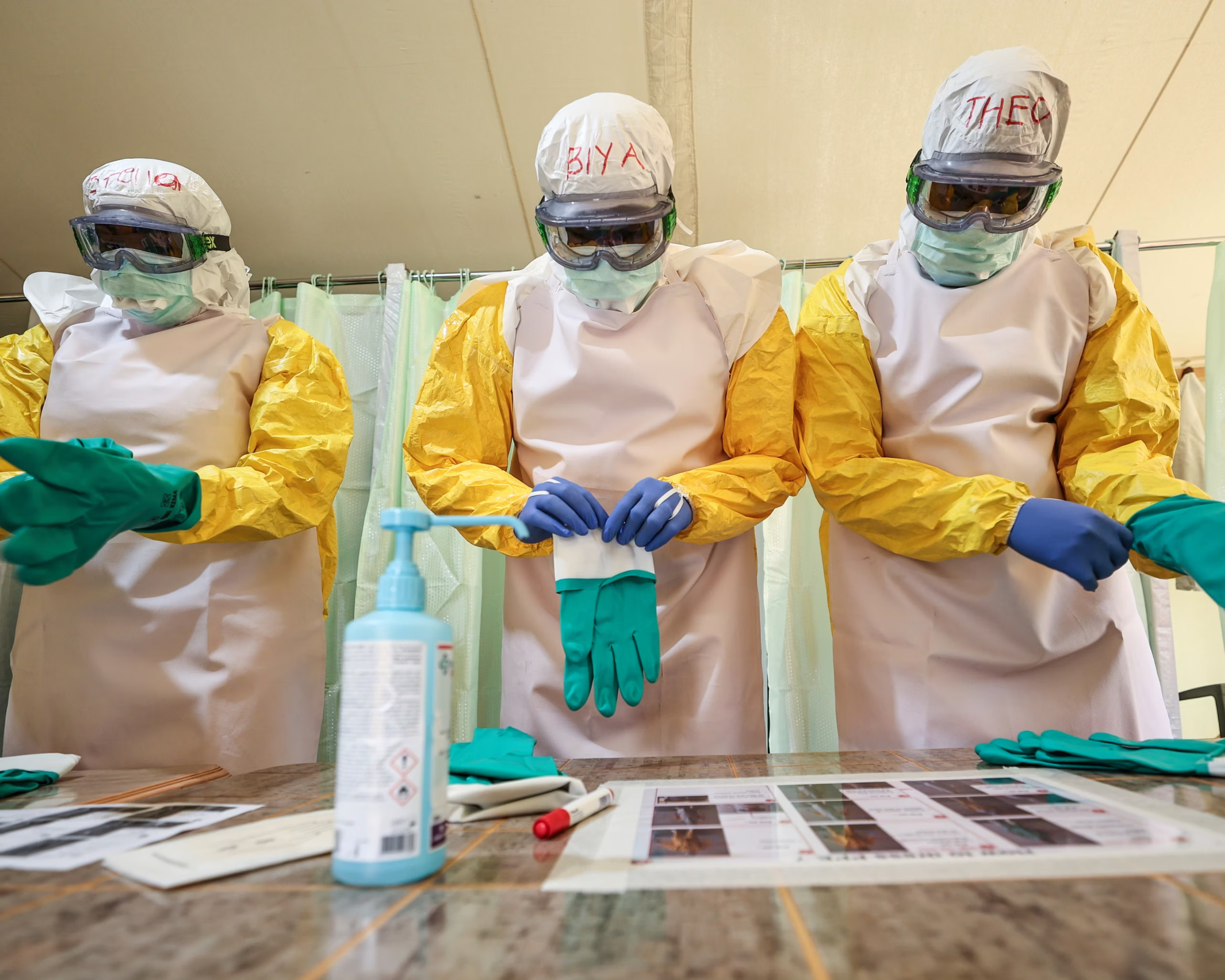
Kenya has confirmed its first imported case of Ebola after a Kenyan citizen who had been living in the Democratic Republic of Congo (DRC) tested positive for the Bundibugyo virus and died in Nairobi.
Health Cabinet Secretary Aden Duale said the patient had lived in the DRC for seven years before travelling by road to Kampala, Uganda, and then flying to Nairobi on October 3 aboard Jambojet flight 8523. He was transported directly from Jomo Kenyatta International Airport to Nairobi Hospital, where he was isolated after developing symptoms. The patient had reportedly been ill for about a month and had received treatment at several hospitals in the DRC before travelling.
After arriving in Nairobi, he developed symptoms including fever, severe fatigue, weakness, muscle pain, painful swallowing, sore throat and bleeding under the skin at an injection site. Laboratory tests subsequently confirmed Ebola. Despite supportive treatment, he died at about 11:30 p.m. on October 5.

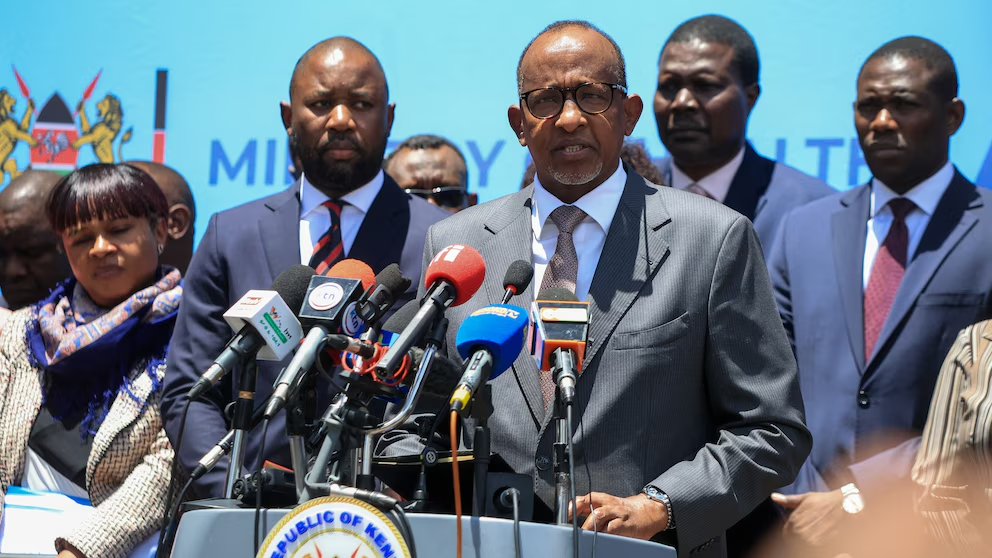
Kenyan health authorities have identified 28 people who had contact with the patient, including family members and healthcare workers. They are also tracing 23 passengers and four crew members who were on the same flight from Kampala to Nairobi. Those considered at risk are being monitored under Ebola response protocols for 21 days.
The case places Kenya among the countries affected by the current regional outbreak of Bundibugyo virus disease. Uganda previously reported 20 cases and two deaths, although the World Health Organization declared the country free of Ebola in August.
France has also reported one case linked to the outbreak. The outbreak in the DRC was declared in May 2026 and has continued to expand despite containment efforts. WHO reported 6,757 confirmed cases in the DRC as of September 7, with 3,269 deaths recorded across the affected countries. The agency has warned that sustained transmission in the DRC continues to create a risk of cross-border spread, particularly because of population movement and difficulties with surveillance and contact tracing.
Kenya had already stepped up preparedness measures earlier this year because of the regional outbreak, strengthening surveillance, laboratory testing, border health services and case-management capacity. The Health Ministry had specifically warned of the risk of cross-border transmission of the Bundibugyo strain.
WHO has assessed the risk to countries bordering the DRC as high because of population mobility and varying response capacity, while its assessment has placed the wider African region and global risk at a lower level.


